
GLASS & ALUMINUM
BLOG
How Custom Aluminium Manufacturing Meets Project Requirements
Every construction and fit out project carries a unique set of requirements. The dimensions are different. The performance specifications are different. The aesthetic expectations are different. The timeline is different. And the budget is different. The challenge for any supplier of glass and aluminum solutions and architectural materials is matching what they can produce to what a project genuinely needs, rather than asking the project to adapt to what is conveniently available off the shelf. From custom glass and aluminium installations to specialized architectural systems, every solution should be designed to meet the exact functional and visual requirements of the project.
This is where custom aluminium manufacturing earns its value, and it is the area where the difference between a supplier who genuinely understands the material and one who simply stocks profiles becomes most apparent. In Dubai's construction and architectural sector, where design ambition is consistently high and project specifications are frequently complex, the ability to manufacture aluminium components that precisely meet project requirements rather than approximately meeting them is a distinction that matters to architects, contractors, and end clients alike.
At Safin Glass, we work at the intersection of glass and aluminium, providing custom fabrication solutions across commercial, residential, and specialist architectural applications. Here is how custom aluminium manufacturing actually works to meet the specific demands of complex projects.
.Transform Your Space with Premium Architectural Glass
Custom laminated, decorative & luxury glass solutions for villas, hotels and commercial projects.
Understanding What Custom Aluminium Manufacturing Actually Means
Custom aluminium manufacturing is not simply cutting standard profiles to a different length. It is the ability to design, fabricate, and finish aluminium components that serve a specific structural or aesthetic function in a specific project context, starting from the material properties and working outward to the finished component rather than starting from a catalogue of available options and working inward to what fits.
This distinction matters because architectural aluminium has properties that make it genuinely versatile when manufactured correctly and genuinely limiting when it is not. Aluminium is lightweight, strong, corrosion-resistant, and highly formable, which makes it an exceptional material for framing systems, curtain wall components, partition frames, door and window systems, louvres, screens, and a range of specialist architectural elements. But these advantages are only fully realised when the manufacturing process is controlled to meet the specific requirements of each application.
Profile design is the starting point. The cross-sectional profile of an aluminium extrusion determines its structural performance, its thermal properties, and its aesthetic character. A custom profile developed for a specific project can be designed with the wall thickness, flange dimensions, and internal reinforcement geometry needed to meet the structural loading and thermal bridging requirements of that project. A standard profile can be adapted, but it always carries the constraints of what it was designed for rather than being optimised for what the current project requires.
Precision Fabrication for Complex Architectural Applications
The projects where custom aluminium manufacturing makes the most significant difference are those with elevated precision requirements, unusual geometries, or performance demands that go beyond what standard systems handle well.
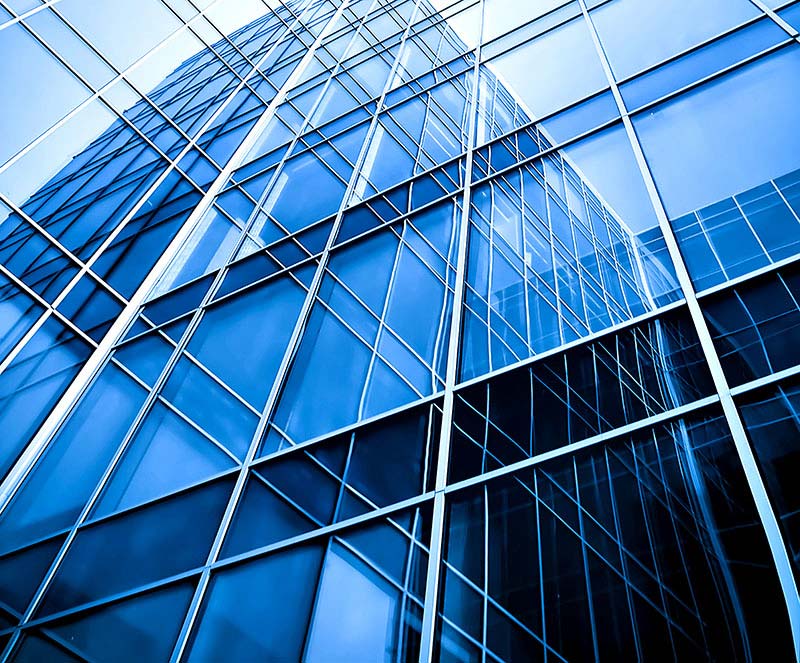
Curtain wall systems on commercial buildings in Dubai routinely involve glass panels and aluminium framing at heights and spans where structural engineering requirements are highly specific and where tolerances are tight enough that manufacturing variation needs to be controlled carefully. The aluminium mullions and transoms that hold the glass in place must be fabricated to dimensions that allow correct installation, correct drainage, correct thermal performance, and correct accommodation of differential movement between the glazing and the building structure. Any deviation from specification at the manufacturing stage creates problems at the installation stage that are expensive to resolve.
Specialist screen and louvre systems, which appear extensively across Dubai's commercial and residential architecture as solar control elements and privacy screens, often involve complex geometries, curved profiles, or angular arrangements that cannot be achieved with standard extruded profiles without significant modification. Custom fabricated aluminium components that are designed specifically for these applications eliminate the compromise and deliver results that are both structurally correct and visually resolved.
Custom glass and aluminium partition systems for commercial interiors carry similar requirements. The frame sections must accommodate the glass thickness specified, provide the correct sight lines for the design intention, and deliver the structural rigidity needed to carry the glass safely at the heights involved. As a glass and aluminum company serving Dubai's commercial fit out market, we design and fabricate partition framing systems that are coordinated with the glass specification from the outset rather than adapted to glass after the fact.
Finishing Options That Match Project Aesthetic Requirements
One of the most visible aspects of custom aluminium manufacturing is the finishing process, and it is an area where the range of available options has expanded significantly to match the ambitions of contemporary architectural design.
Anodising is the most durable finishing process for architectural aluminium and produces a surface that is integral to the metal itself rather than applied over it. The anodised layer can be clear, or it can be coloured in a range from bronze and champagne to grey and black, providing aesthetic options that age consistently and maintain their appearance under the sustained UV exposure that Dubai's climate delivers to exterior aluminium surfaces.
Powder coating provides the widest colour range available for architectural aluminium and produces a smooth, consistent finish that suits contemporary design aesthetics across both commercial and residential applications. The powder coating process can achieve RAL colours across the full spectrum, allowing aluminium components to match or complement any other material specified within the project.
PVDF or Kynar coating is the premium option for exterior aluminium on commercial buildings where long-term colour retention and resistance to the harsh combination of UV exposure, heat, and salt air in coastal environments is required. This coating specification is commonly required for curtain wall aluminium, cladding systems, and exterior screening elements on Dubai projects where a twenty-year colour warranty is a contractual requirement.
Choosing the correct finish specification for the application and environment is a decision that benefits from the expertise of aluminium material suppliers who understand how different finishes perform in the specific conditions of Dubai's climate rather than treating all environments as equivalent.
Lead Times, Coordination, and the Project Management Dimension
Custom aluminium manufacturing exists within a project timeline that does not wait for manufacturing delays, and the ability to deliver to programme is as important as the ability to deliver the correct product.
The lead time from design finalisation through die creation, extrusion, fabrication, finishing, and delivery varies depending on the complexity of the profiles involved and the finishing specification. Simple fabrication from standard profiles can be completed quickly. Custom die work adds lead time that needs to be factored into the project programme at the design stage rather than discovered when the procurement process is underway.
At Safin Glass, we work with project teams to understand programme requirements from the earliest possible stage, providing lead time guidance that allows accurate programme planning and avoiding the situation where design decisions are reversed late in the process because manufacturing timelines cannot accommodate them. This coordination between manufacturing capability and project management is part of what we mean when we describe ourselves as a genuine project partner rather than simply a material supplier.
Glass installation requirements also need to be integrated into this planning process. The relationship between the aluminium framing system and the glass it carries determines how both elements need to be manufactured, and coordinating the two from a single supply relationship simplifies the interface and reduces the risk of tolerance mismatches that create installation difficulties on site.

Quality Assurance in Custom Aluminium Manufacturing
Custom manufacturing is only as valuable as the quality assurance process that validates what has been manufactured. A custom component that does not meet its specified dimensions, material properties, or finish specification causes project problems regardless of how well it was conceived.
Quality assurance in aluminium manufacturing covers dimensional verification of extruded profiles, mechanical testing of fabricated components, finish thickness and adhesion testing for coated surfaces, and documentation that allows the performance of supplied components to be verified and traced. For projects where performance certification is required, whether for fire resistance, thermal performance, wind load capacity, or other parameters, the testing and certification of the manufactured components is part of the supply deliverable rather than an afterthought.
Safin Glass maintains quality standards across every stage of the manufacturing and fabrication process, ensuring that what we deliver on site matches what was agreed at the specification stage and supports rather than complicates the installation process that follows.
Final Thought
Custom aluminium manufacturing is the difference between a project that achieves what its designers intended and one that compromises along the way. In Dubai's architectural environment, where design ambition is matched by demanding project specifications and tight timelines, working with a supply partner that can design, fabricate, finish, and deliver aluminium components to precise project requirements is a practical commercial necessity rather than a premium option. Safin Glass is here to be that partner across the full range of projects our clients bring to us.
Frequently Asked Questions
What is the difference between custom and standard aluminium manufacturing?
Custom aluminium manufacturing designs and produces components from the material up to meet specific project requirements, including custom profiles, precise fabrication dimensions, and project-matched finishing. Standard manufacturing uses catalogue profiles adapted to fit, which involves inherent compromises in performance and aesthetic resolution.
How does aluminium manufacture differ for exterior versus interior architectural applications?
Exterior applications require finishing systems with demonstrated UV and weathering resistance, such as anodising or PVDF coating, and structural profiles designed to withstand wind loads and thermal movement. Interior applications focus more on aesthetic finish quality and the precise accommodation of glazing specifications.
What finishing options are available for custom aluminium components in Dubai?
Anodising, powder coating in any RAL colour, and PVDF coating for premium exterior durability are the primary finishing options, each suited to different applications and performance requirements in Dubai's climate conditions.
How far in advance should custom aluminium components be specified for a project?
Complex custom profiles with new die work require earlier specification than fabrication from standard profiles. We recommend engaging with Safin Glass at the design development stage rather than the procurement stage to allow programme-accurate lead time planning.
Does Safin Glass supply both the aluminium framing and the glass for installation projects?
Yes. As a glass installation and aluminium fabrication specialist, Safin Glass coordinates both elements from a single supply relationship, ensuring compatibility between framing and glazing specifications and simplifying the project interface for contractors and fit out teams.